
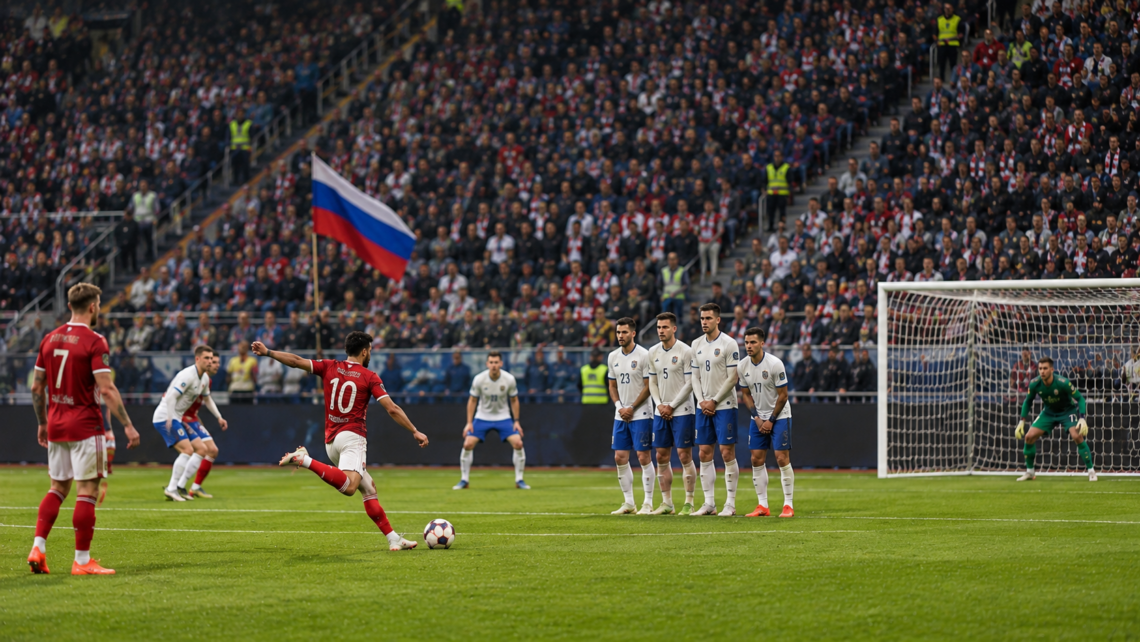
The Stories Behind Every Match
Russian football has a character that becomes especially apparent when a match is viewed beyond its final score. A decisive goal may dominate the headlines, but the full story often begins much earlier: with the first tactical adjustment, a missed opportunity, a difficult stretch of defending or a moment when one team gradually takes control. Exploring Russian Premier League match replays offers an opportunity to appreciate these details and understand why domestic football continues to attract passionate supporters.
The Russian Premier League brings together clubs with different histories, ambitions and footballing identities. Established institutions compete with ambitious newcomers, while teams from geographically distant cities contribute their own traditions and approaches to the game. This variety gives the competition a distinctive character. Each fixture becomes part of a larger sporting narrative shaped by local pride, changing generations of players and the unpredictable nature of a long season.
A League Defined by Its Regional Character
One of the most interesting aspects of Russian football is the geographical diversity of its clubs. The league connects cities with different sporting cultures, local traditions and relationships with their teams. For supporters, a club is rarely just a name in a table. It represents a community, a shared history and a source of identity.
This regional character can influence the atmosphere surrounding a fixture. Matches between established rivals often carry an emotional intensity that is difficult to measure through statistics alone. Even when the teams occupy different positions in the standings, their meetings can become important events for supporters who have followed the rivalry for years.
The contrast between clubs also creates different expectations. Some teams are associated with sustained success and the pressure to compete for major honours. Others approach each season with the ambition of establishing themselves among the country’s strongest sides. Their encounters can produce compelling contests because the motivations are not always the same.
Watching a match again makes these relationships easier to appreciate. The crowd’s reaction to a particular challenge, the urgency of a late defensive intervention or the celebration following a goal can reveal how much a fixture means to the people connected with both clubs.
Beyond the Scoreline: How Matches Develop
A final score provides a simple summary, but it cannot explain everything that happened during ninety minutes. A team may dominate possession without creating enough clear chances, while an opponent can remain dangerous through quick transitions and carefully organised defensive work.
The opening stages are often particularly revealing. Coaches use this period to establish the intended rhythm, test the opponent’s defensive structure and identify spaces that might become important later. Some teams begin aggressively, pressing high and trying to force mistakes near the opposition penalty area. Others prefer a measured approach, keeping their shape compact and waiting for opportunities to move forward.
These differences become clearer when the entire contest is considered rather than a collection of isolated highlights. A seemingly quiet first half may contain the foundations of a decisive second-half performance. A winger repeatedly drawing two defenders towards the touchline, for example, can create space for an overlapping full-back or an advancing midfielder.
The same principle applies to defensive organisation. A goalkeeper’s intervention may appear to be the defining moment, but the replay can show how the chance developed and which earlier decisions allowed the opposition to threaten. Understanding these sequences gives viewers a more complete appreciation of the tactical work behind the result.
The Importance of Midfield Battles
Midfield often determines the character of a Russian Premier League fixture. It is the area where teams attempt to control possession, disrupt attacking combinations and decide how quickly the game should move from one phase to another.
A technically confident midfield can help a side maintain pressure for long periods. Players who receive the ball under pressure, turn into open space and distribute it accurately can gradually change the balance of a contest. Their contribution may not always produce spectacular moments, but it often determines whether an attacking move develops successfully.
Other teams rely on physical strength, disciplined positioning and aggressive challenges. Their midfielders concentrate on closing passing lanes, contesting second balls and preventing opponents from turning towards goal. Such matches can become intense tactical struggles in which every loose ball matters.
Repeated viewing helps reveal the individual responsibilities within these systems. One midfielder may remain close to the defensive line, while another moves into advanced positions to support the forwards. A third player might be responsible for pressing the opposition’s main creative influence.
These roles are not always obvious during a fast-moving broadcast. Looking at the match again makes it easier to follow the movements that connect defence and attack.
Club Ambitions and the Pressure of a Long Season
The Russian Premier League is shaped by several competing objectives. The leading clubs aim to challenge for the championship and secure strong performances in domestic competitions. Teams in the middle of the table often focus on consistency, while those lower down must find ways to collect points under increasing pressure.
These different circumstances influence how matches are approached. A title contender may be expected to dominate possession and take the initiative, particularly against a side that prefers to defend deep. However, such fixtures can become complicated when the opponent remains organised and takes advantage of limited opportunities.
For a team fighting to improve its position, a draw away from home may represent a valuable result. A late goal can change the mood of an entire campaign, while a narrow defeat may expose weaknesses that require attention before the next round.
The context of a match therefore matters as much as its immediate outcome. A performance that appears ordinary in isolation may become significant when considered alongside previous results and upcoming fixtures. Rewatching important games allows supporters to understand how individual moments influenced the direction of a season.
The Players Who Shape the Competition
Every league is remembered through the players who give it personality. Some become known for their technical quality, others for their leadership, consistency or ability to deliver in difficult situations.
Russian football has traditionally placed considerable importance on strong goalkeeping, disciplined defenders and midfielders capable of combining physical commitment with technical skill. At the same time, attacking players bring variety through acceleration, intelligent movement and individual creativity.
The development of younger footballers is another important part of the competition. Emerging talents often receive opportunities to demonstrate their abilities against experienced opponents. Their progress can be followed through changes in confidence, decision-making and tactical awareness.
A young forward may initially depend on speed and instinct, but repeated appearances can reveal improvements in positioning and combination play. A defender who once relied mainly on physical strength may gradually become more comfortable initiating attacks from the back.
Full-match viewing is particularly useful when following such development. A goal or an assist offers a memorable snapshot, but the player’s work away from the ball can provide a more meaningful picture of their overall contribution.
Stadium Atmosphere and the Emotional Side of Football
Football is not experienced only through tactical systems and individual performances. Stadiums give the Russian Premier League much of its emotional character. Supporters create an atmosphere through songs, coordinated displays, flags and reactions that change with the rhythm of a match.
The energy of a home crowd can influence the way a team approaches difficult moments. A series of successful challenges may encourage players to press more aggressively, while a goal can transform the atmosphere and create renewed momentum. Away supporters bring another dimension, particularly when a fixture carries historical or regional significance.
The stadium environment also adds meaning to smaller details. A goalkeeper applauding the crowd after an important save, a captain encouraging teammates during a difficult spell or a group of players celebrating with travelling supporters can become memorable parts of the occasion.
These moments rarely appear in short highlight packages. They belong to the wider experience of football, where emotion develops gradually and often becomes inseparable from the sporting contest itself.
Why Full-Match Viewing Offers a Different Perspective
Highlights are useful when time is limited. They provide quick access to goals, major saves and important incidents. However, they naturally concentrate on moments that can be understood without the surrounding context.
A full match offers a different experience. It allows viewers to follow the tempo of the contest, recognise changes in tactical organisation and understand how one team’s decisions influence the other. It also reveals the importance of sequences that do not necessarily end with a shot.
For example, a team may spend several minutes moving the opposition from side to side before creating an opening. Another may absorb pressure patiently and then launch a dangerous counterattack through a carefully timed pass. These patterns are part of football’s appeal, even when they do not immediately produce a goal.
Watching a match again can also change the perception of individual performances. A player who receives little attention in the initial broadcast may prove essential through intelligent positioning and consistent defensive work. Similarly, a substitute’s contribution becomes easier to evaluate when the circumstances of the game are understood.
The opportunity to revisit a contest is valuable for supporters, analysts and anyone interested in the details that make football compelling.
A Competition That Continues to Evolve
The Russian Premier League remains a competition in which established traditions meet changing football ideas. Clubs continue to develop their approaches to training, recruitment and youth development, while coaches adapt tactical systems to the qualities of their squads.
The modern game places increasing emphasis on flexibility. Teams may change their pressing intensity, adjust their defensive line or introduce additional attacking options depending on the opponent. Players are also expected to perform several roles rather than remain limited to one position.
These developments make the competition interesting to follow over time. A club’s identity may remain recognisable, but its playing style can change as new coaches and generations of footballers arrive. Young players bring fresh energy, experienced professionals provide stability, and supporters observe how these elements combine throughout the season.
For anyone who wants to understand Russian football beyond isolated results, returning to complete matches offers a valuable perspective. It reveals the decisions, relationships and moments of character that shape each fixture.
The lasting appeal of the Russian Premier League lies in this combination of competition and personality. Every match contributes another chapter to the story of its clubs, players and supporters. Sometimes the most revealing details are not found in the final goal, but in the long sequence of events that made it possible.

You May Also Like

Plan a Coastal Day with Space to Stop

Organise a Vanity around What You Actually Use